

Leader in resin flooring

Leader in resin flooring
18 February 2026
HACCP and resin flooring for the agri-food sector
HACCP and resin flooring: Prima article about all features and benefits of resin systems for food & beverage industry.
Introduction
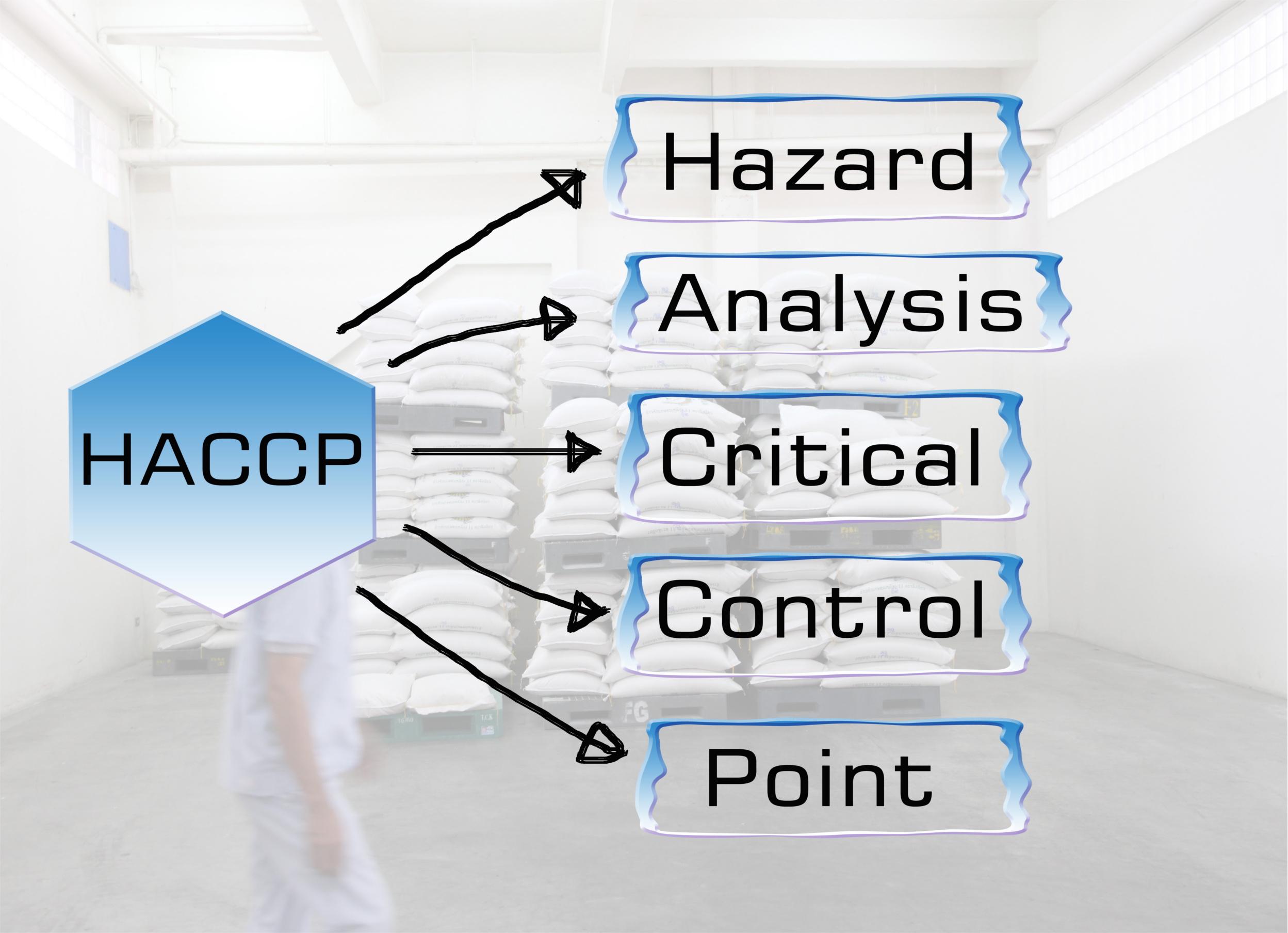
HACCP (Hazard Analysis and Critical Control Points) is a set of procedures that analyse hazards and critical control points, dedicated to preventing possible food contamination, which all agri-food companies involved in food processing, from raw material processing to product packaging and storage, must comply with. Controlling production and therefore the risks of contamination not only prevents food contamination but also protects the end consumer.
HACCP procedures vary and are tailored to the activities carried out by the company. Each company has different structural characteristics and production cycles, so the documentation cannot be standardised but must be tailored to each agri-food business.
Types of food companies
Which categories must comply with HACCP standards?
Food companies are divided into:
From a technological point of view, food companies can be divided into:
ATECO classification
Various classifications have been adopted, such as that of ISTAT, which identifies the type of production activities according to the materials used and/or produced (meat and meat-based foods; fish, crustaceans and molluscs; fruit and vegetables; vegetable and animal oils and fats; milk and milk products; cereals, starches and starchy products; bakery and flour products; sugar; cocoa, chocolate, sweets and confectionery; tea and coffee; condiments and spices; prepared meals and dishes; homogenised and dietetic foods; animal feed).
The ATECO (➔) 2007 classification includes in industry a. the production of various intermediate products, which are not to be considered on the same level as those in industry in the strict sense (e.g., leather from slaughterhouses, oil production) and groups beverage industry companies (divided into distilled alcoholic beverages, fermented alcoholic beverages, non-alcoholic beverages, mineral waters) and tobacco companies into specific categories.
Gallery
What are the features and benefits of resin flooring for the food industry?
Continuous, non-slip and hygienic. Suitable for food.
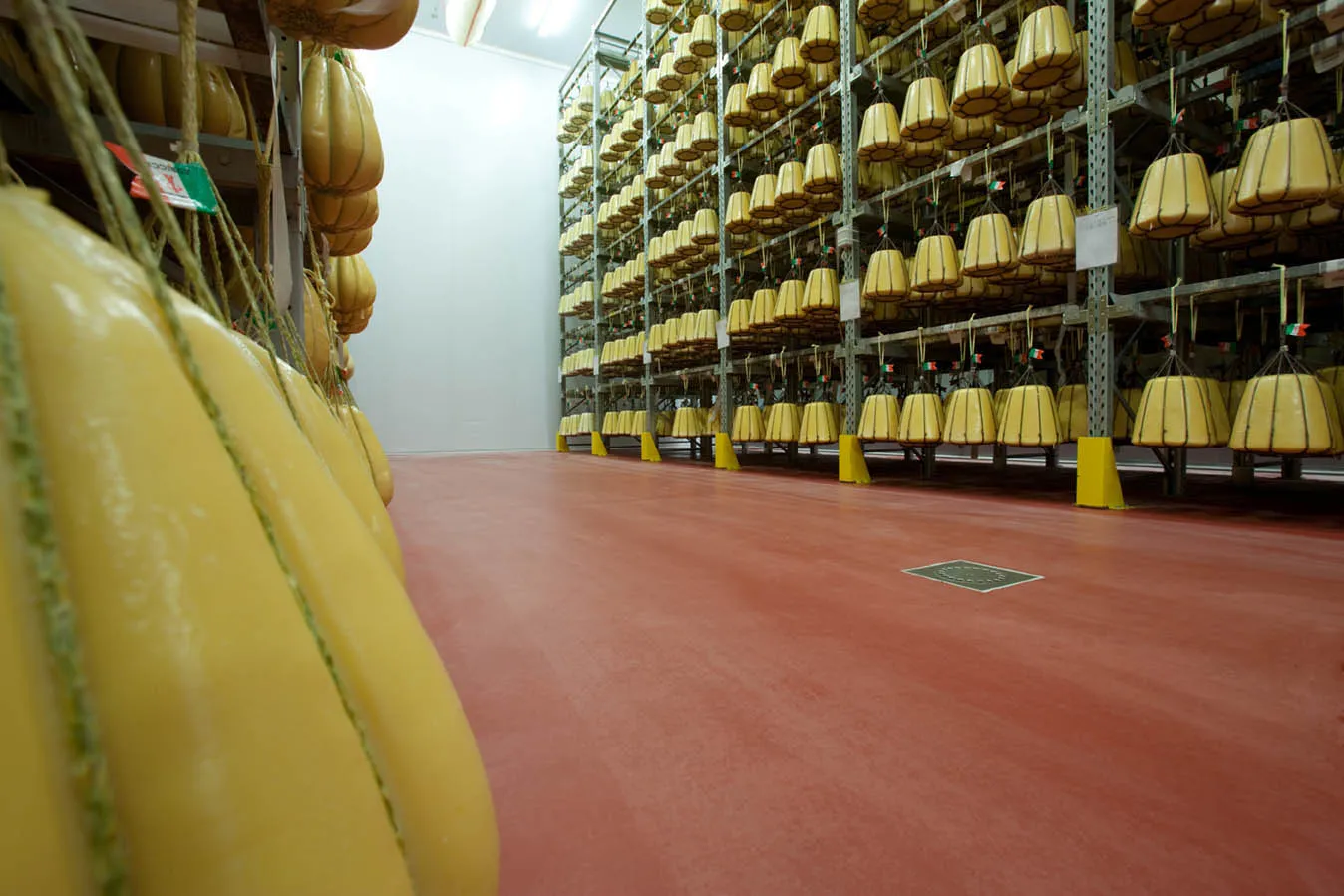
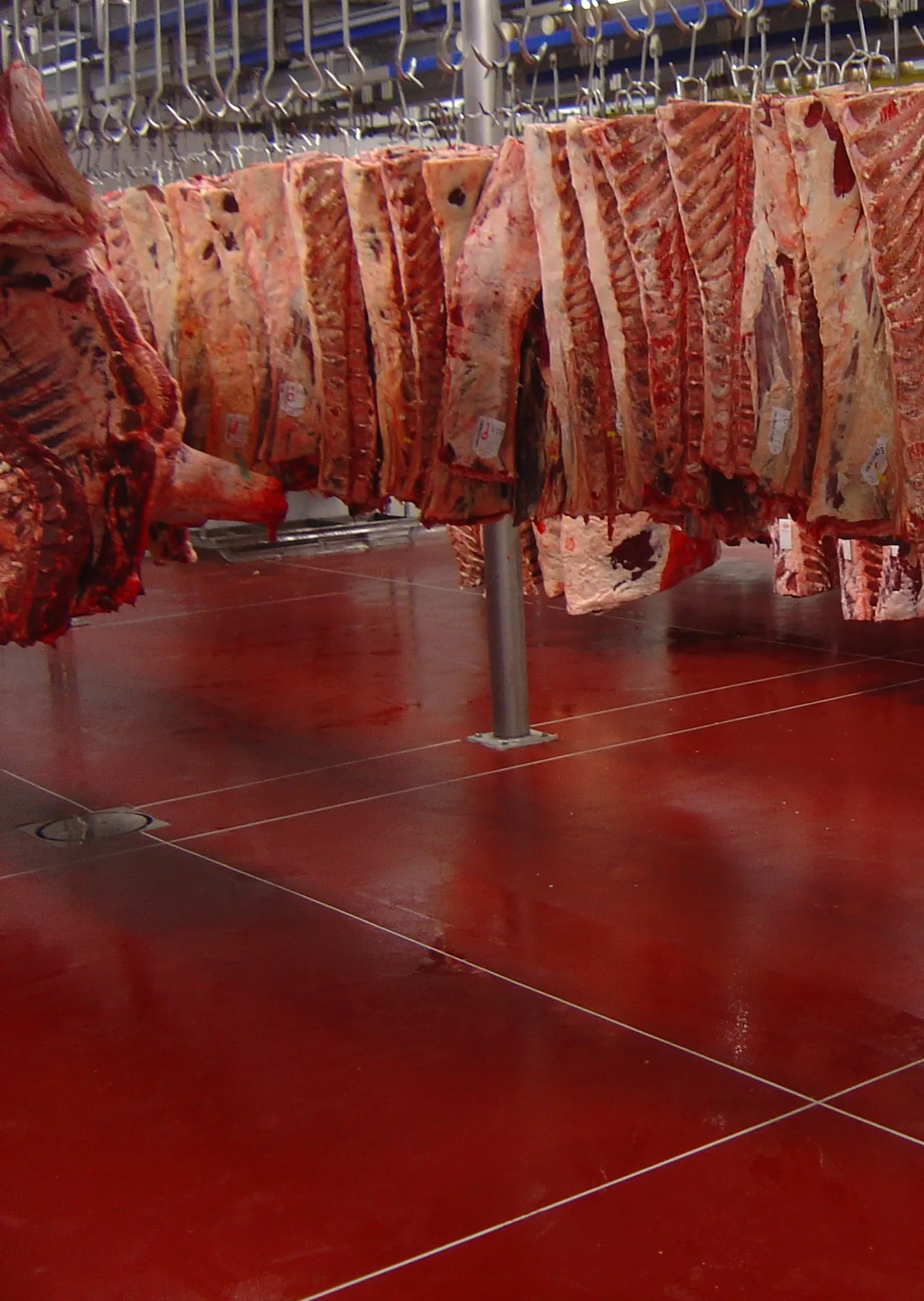
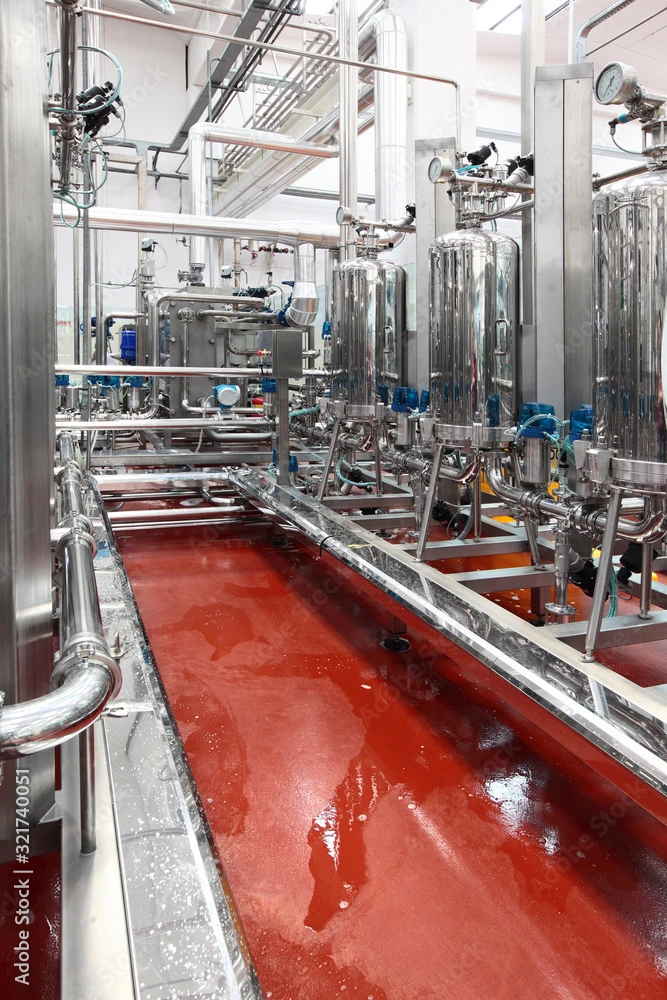
Epoxy or polyurethane cement flooring helps risk control. Seamless surfaces prevent food contamination and the proliferation of bacteria, ensuring the hygiene and safety of the processed product. They are breathable yet impermeable, resistant to thermal shock, wear and aggressive chemicals. They are easy to clean and sanitize, even at high temperatures and high pressure. They withstand thermal shock.
Safety
When it comes to safety, companies must adopt the best procedures to ensure worker safety: resin flooring has anti-slip properties that overcome the risks associated with the activity itself, even when the floor is wet or there is steam present.
Resin floors comply with the provisions of Legislative Decree 81/2008 CONSOLIDATED LAW ON HEALTH AND SAFETY AT WORK. Furthermore, the flooring we produce complies with ESG parameters, starting with low emissions of volatile organic compounds (VOCs).
In industrial food environments, we create skirting boards to ensure continuity and hygiene between the floor and walls, and we also take care of wall cladding.
Share this article on your favourite channel
GET IN TOUCH