

Leader in resin flooring

Leader in resin flooring
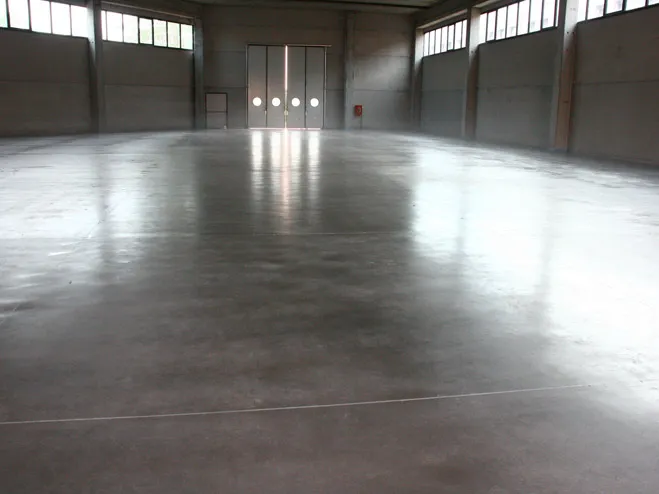
Concrete industrial flooring
Traditional Method
Localised casting using traditional methods
 Low Mainteinance
Traditional method
Per pavimentazione industriale eseguita secondo i canoni del metodo tradizionale si intende una superficie in calcestruzzo realizzata con campiture di getto di dimensioni modeste. Viene realizzata unendo un legante idraulico (cemento), con aggregati (sabbia, pietrisco, ghiaia), amalgamati con acqua ed eventuali additivi sino a formare una miscela.
Industrial flooring constructed using traditional methods involves creating a concrete surface through small-scale casting. This involves combining a hydraulic binder (cement) with aggregates (sand, crushed stone, or gravel), which are then mixed with water and any additives to form a mixture.
ADVANTAGES
 Durability and resistance to wear, impact and heavy loadsLow maintenance, mainly limited to periodic cleaningCustomisation of concrete mix design according to
the project
Suitable for indoor and outdoor useFlooring construction
Preparation of the substrate
Start by preparing the ground, digging down to the required depth, compacting the laying surface, and creating any foundation layers (stabilised gravel). Polyethylene and TNT sheets may be laid on top vapour barrier.
Reinforcement
An electro-welded mesh is then positioned for reinforcement (which limits movement, cracks and fissures in the flooring and the warping of concrete slabs), sized according to the executive design.
Concrete casting
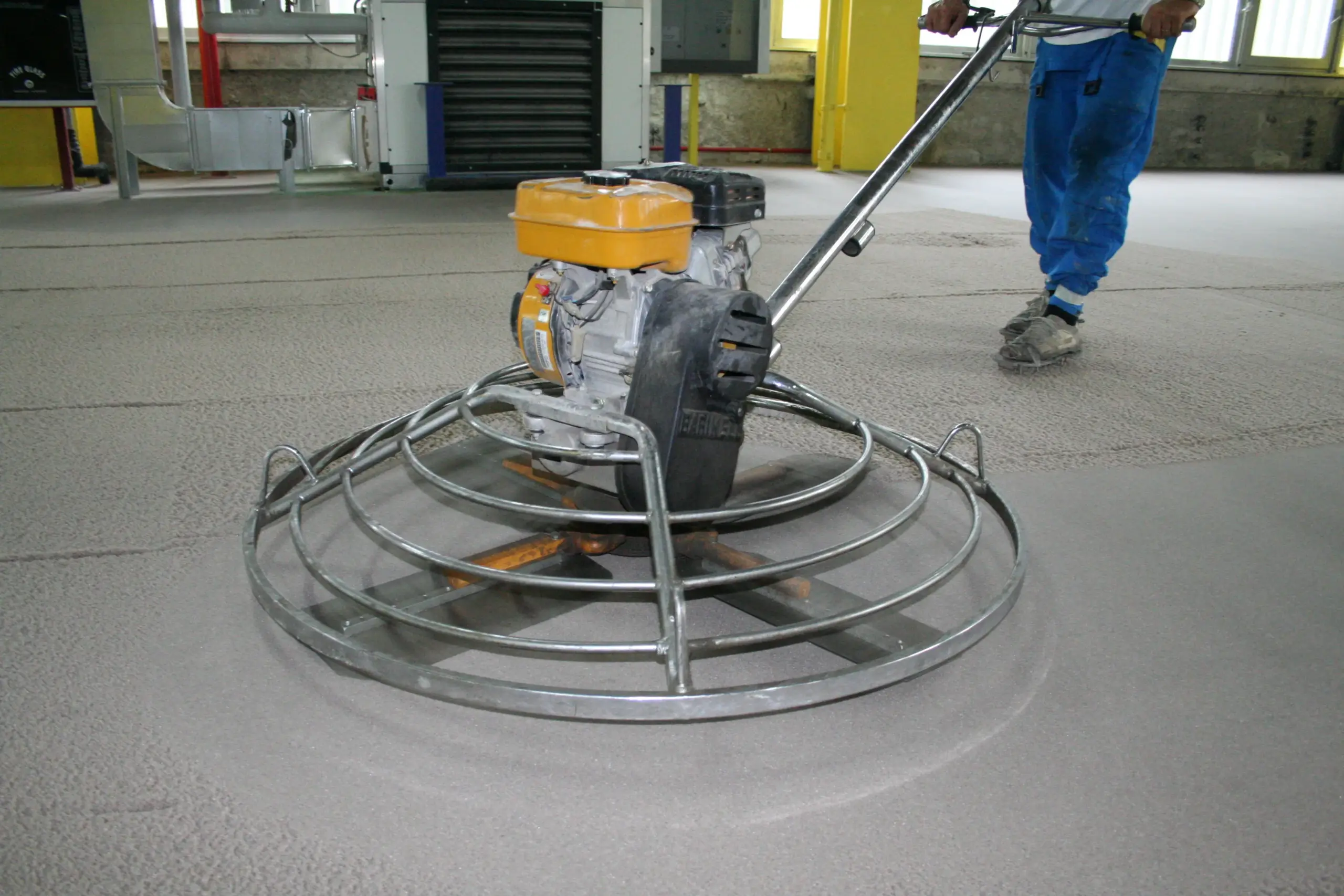
The concrete is then poured, levelled with a straight edge and vibrators to remove air bubbles. The surface is smoothed manually with a trowel or float in several successive steps.
Finish
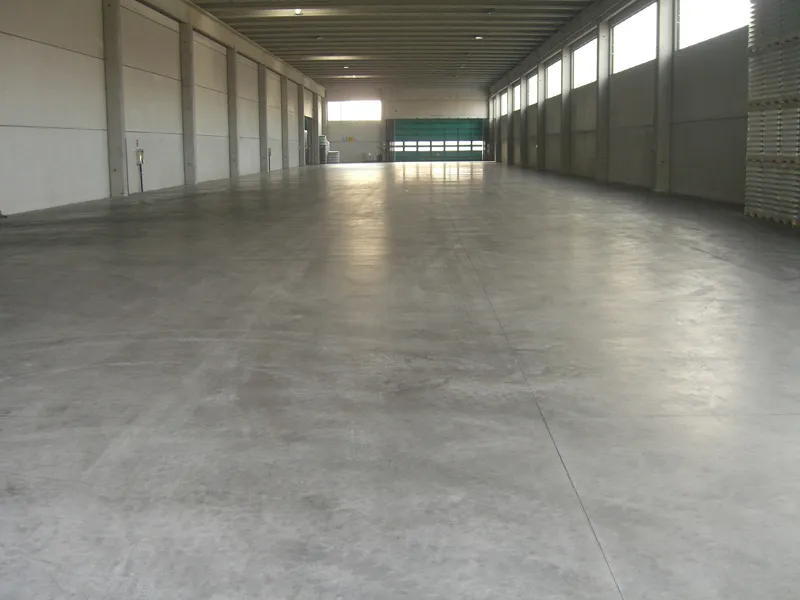
After the concrete has been poured and hardened, the flooring is divided into sections using diamond disc cutters, creating contraction joints (control joints) and construction joints.
Contraction joints reduce the traction caused by volume changes due to temperature variations and water evaporation, thus limiting the formation of cracks.
Construction joints, on the other hand, allow horizontal movement but must also prevent vertical movement. They act as a bridge between the various casting fields and ensure the transfer of stresses from one slab to another.