
Leader in resin flooring

Leader in resin flooring
Resin flooring – Application areas
Aerospace
Antistatic and non-slip surfaces compliant with airport regulations
Custom design
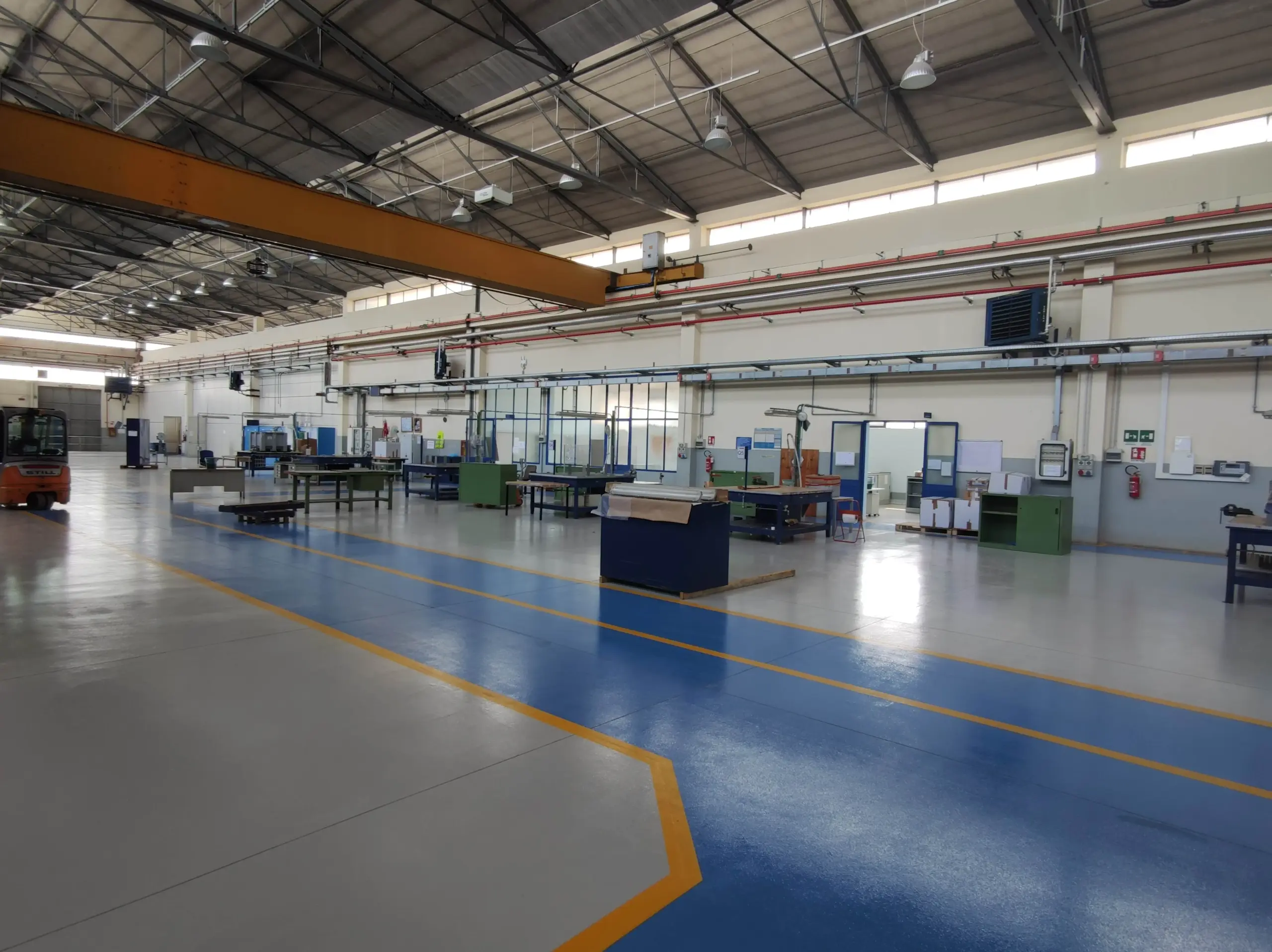
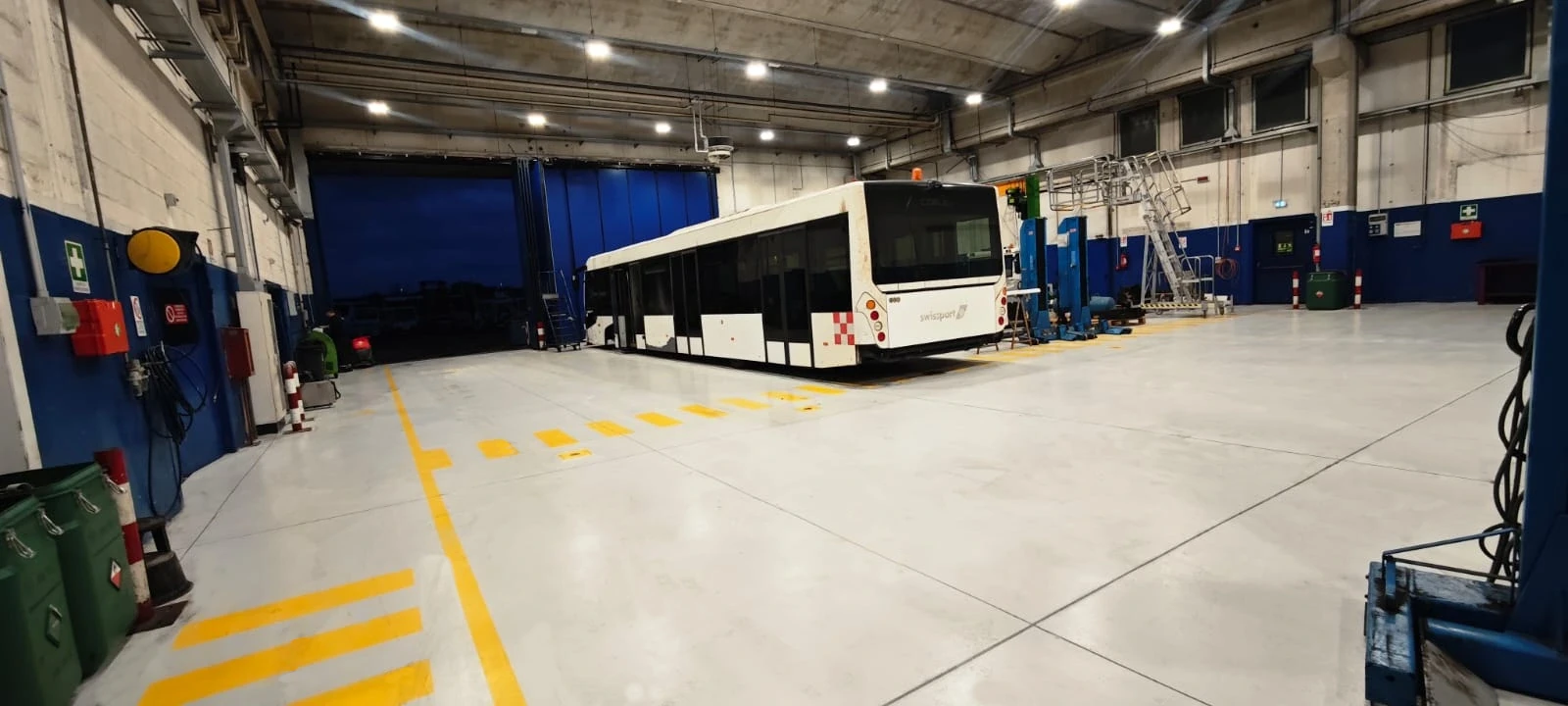
The design of resin flooring for aerospace requires a multidisciplinary approach based on the analysis of specific activities for each environment. A maintenance hangar has radically different requirements from a clean room or a painting area. The ideal solution comes from translating operational routines into measurable performance requirements.
Cross-functional dialogue
Effective design integrates the contributions of various figures: production, safety, maintenance, and quality. This empirical knowledge is systematized into precise technical parameters, as mechanical resistance, chemical resistance to contact agents, planimetric tolerances, and electrical conductivity, which are required for each operational area.
Operational sustainability of the intervention
As aeronautical plants rarely have the option of halting production, design must strike a balance between technical excellence and practical feasibility. Preparation times, resin curing times, sequential processing, and the impact of seasonal conditions must all be considered to ensure operational continuity during the intervention.




Acoustic comfort

Antistatic constraints

Crack Bridging

Clean Rooms

Electrostatic constraints

Eco-friendly

LEEDCredits
Application areas
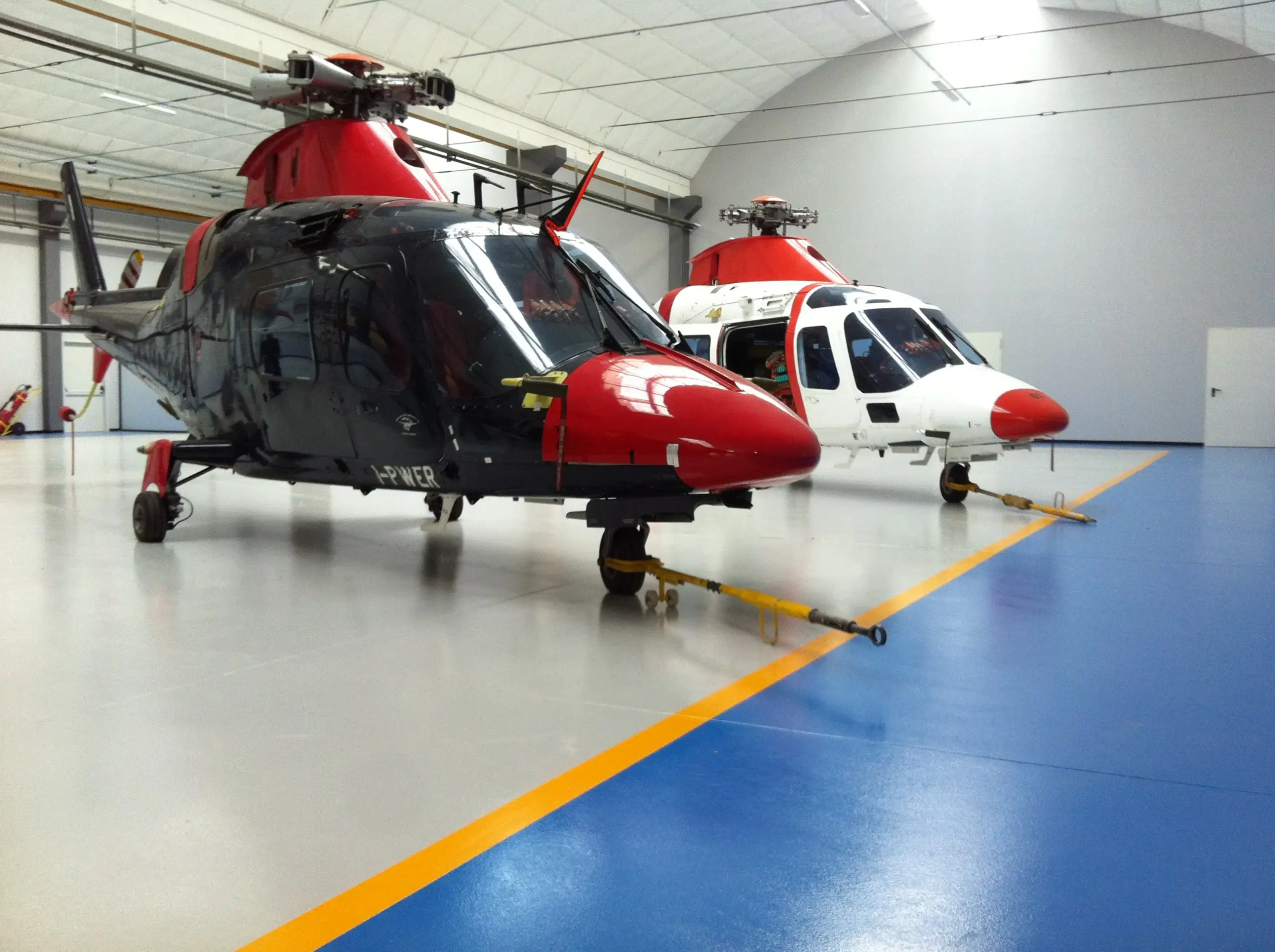
Resin flooring is ideal for military or commercial airport hangars as it is resistant to hydrocarbons, solvents, propellants, and aviation fluids. It provides an impermeable, non-slip surface that can withstand heavy aircraft traffic, concentrated loads, and constant maintenance activities.
Flooring can be made with dissipative or antistatic properties. This is because, in some aerospace environments, there may be a dispersion of microdust or residues of explosive materials.
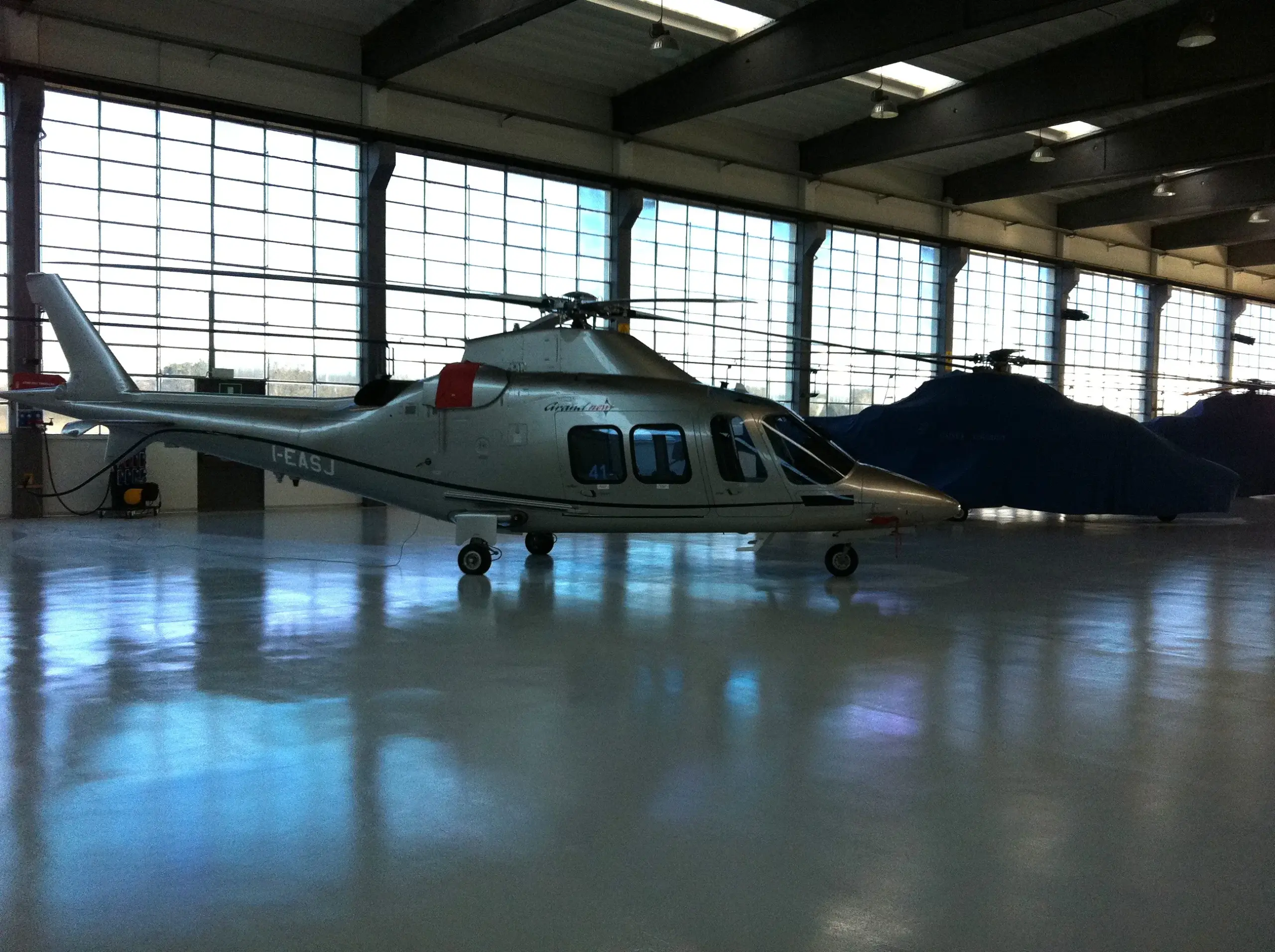
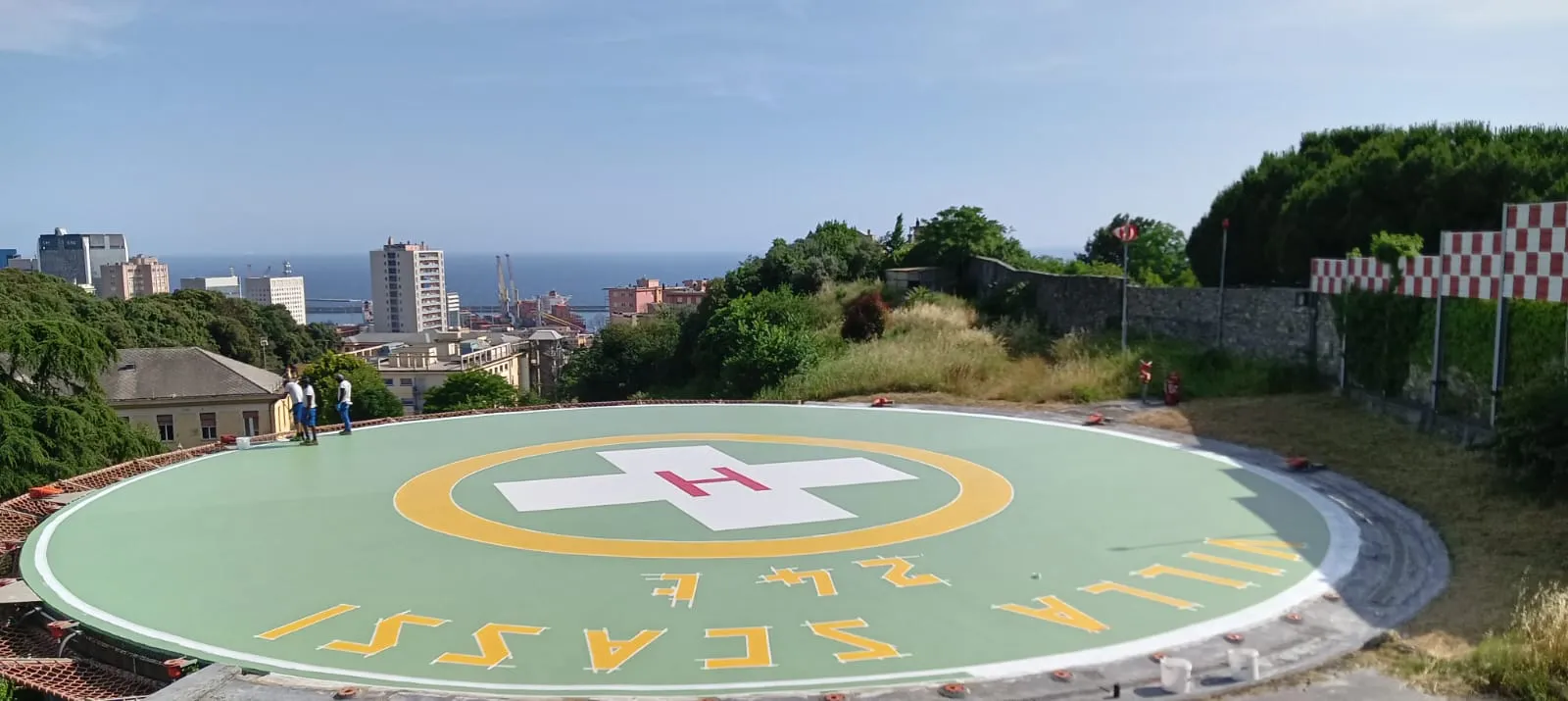
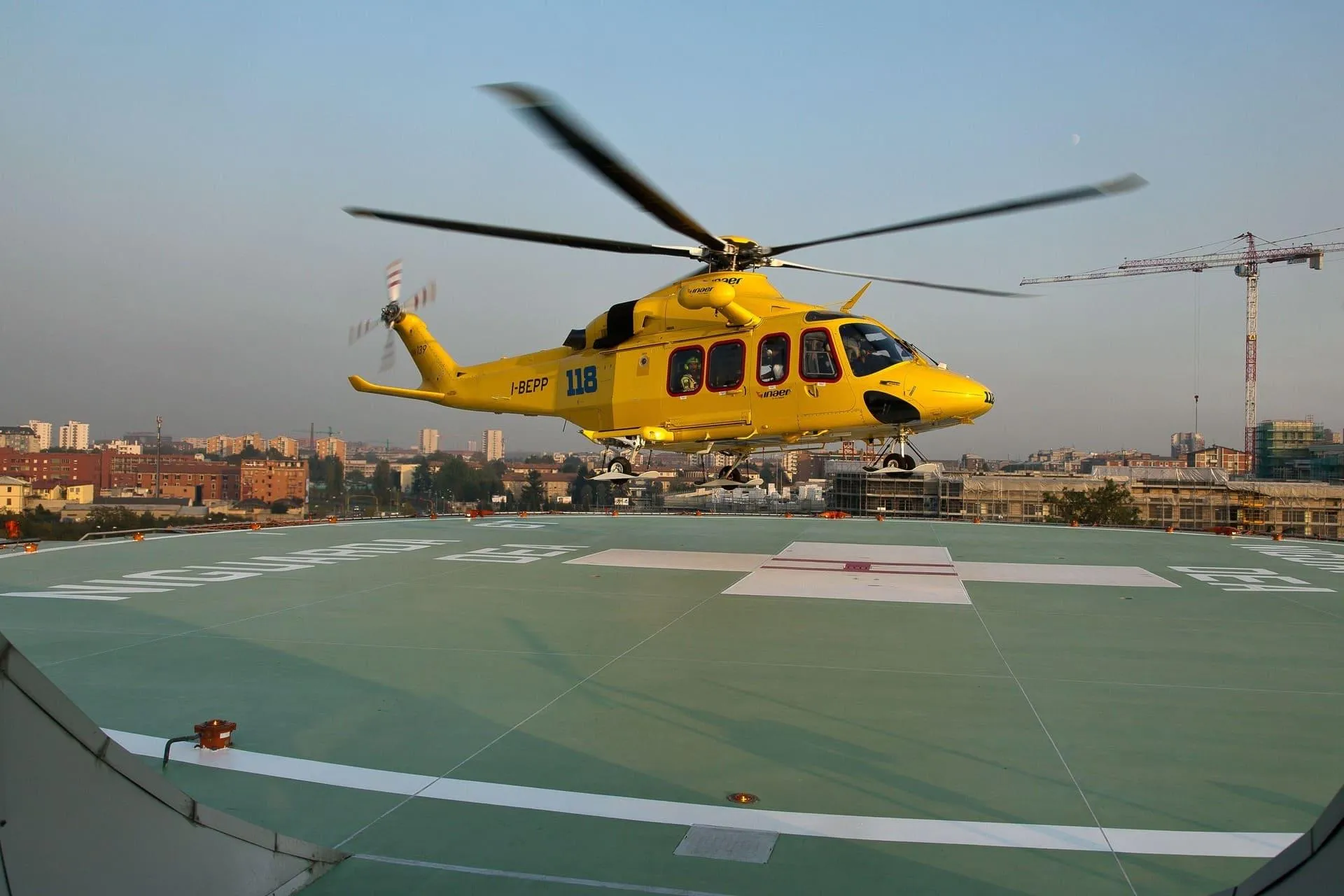
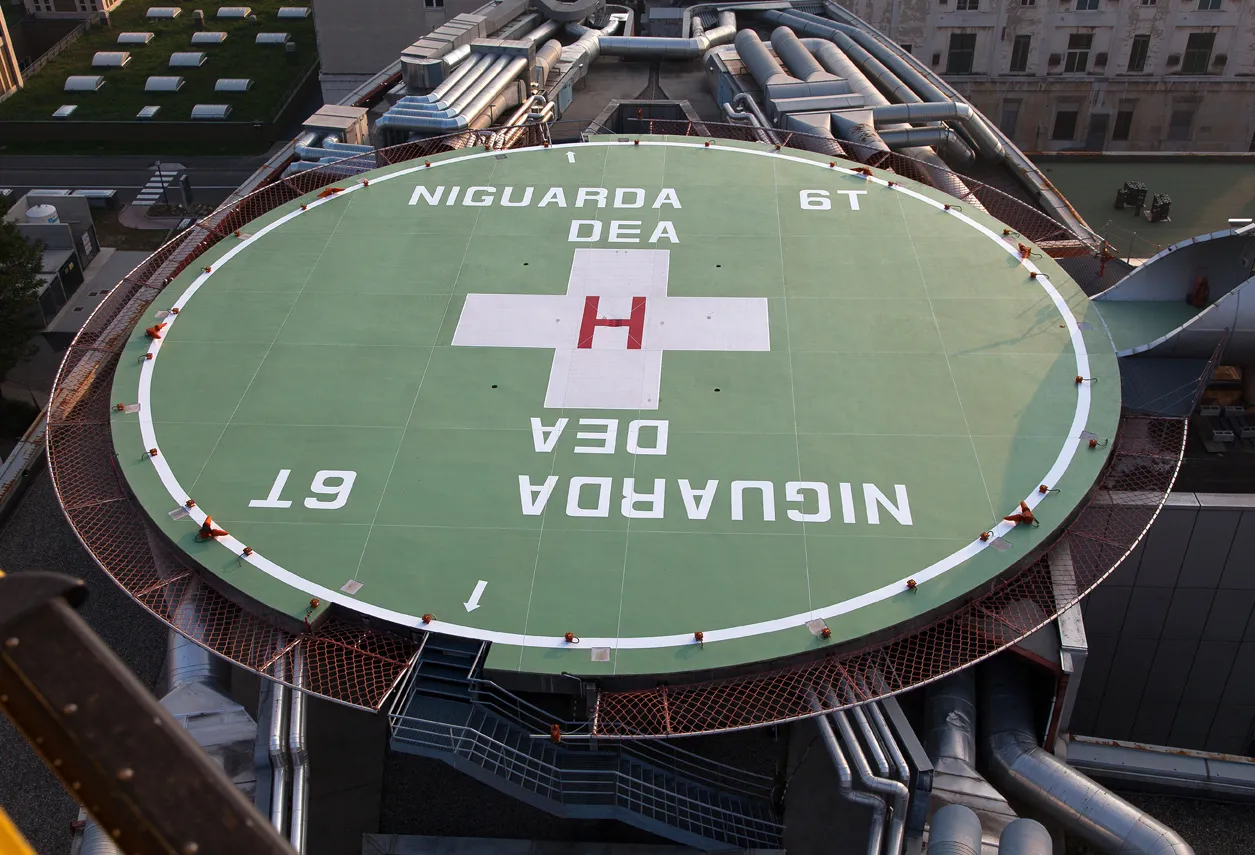
Resin solutions are suitable for coating heliports or airfields located on the ground or elevated, ensuring a surface free of irregularities that could negatively affect helicopter landing or takeoff maneuvers. These floors withstand extreme stress and abrasion sufficient to withstand a helicopter’s aborted takeoff or resist the downward flow of the rotor. Waterproof and continuous, they facilitate cleaning operations. They can be made with various non-slip finishes, and the absence of joints allows for easier vehicle transit.
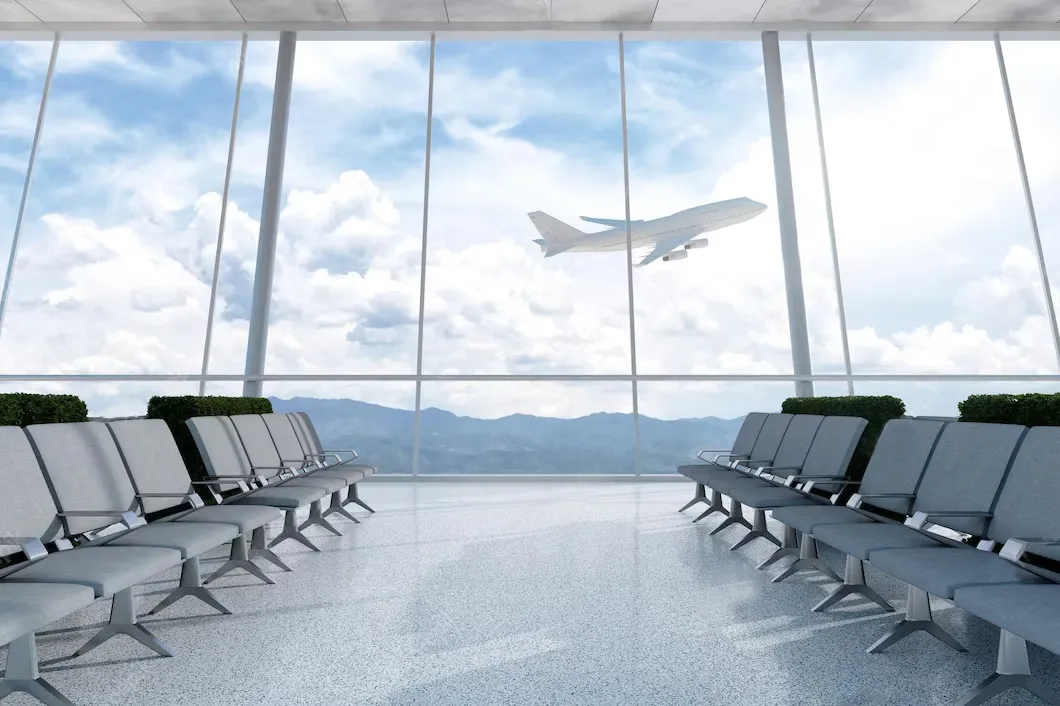
In areas of the airport with high and constant foot traffic, such as passenger areas, baggage halls, and waiting rooms, it is necessary to have functional flooring that is aesthetically appealing and guarantees durability, safety, and comfort.
High-performance polyurethane comfort systems and decorative systems as “Venetian Terrace” are long-lasting and more resistant than traditional epoxy systems. They can withstand constant, high-volume visitor traffic and intensive airport cleaning procedures.
.
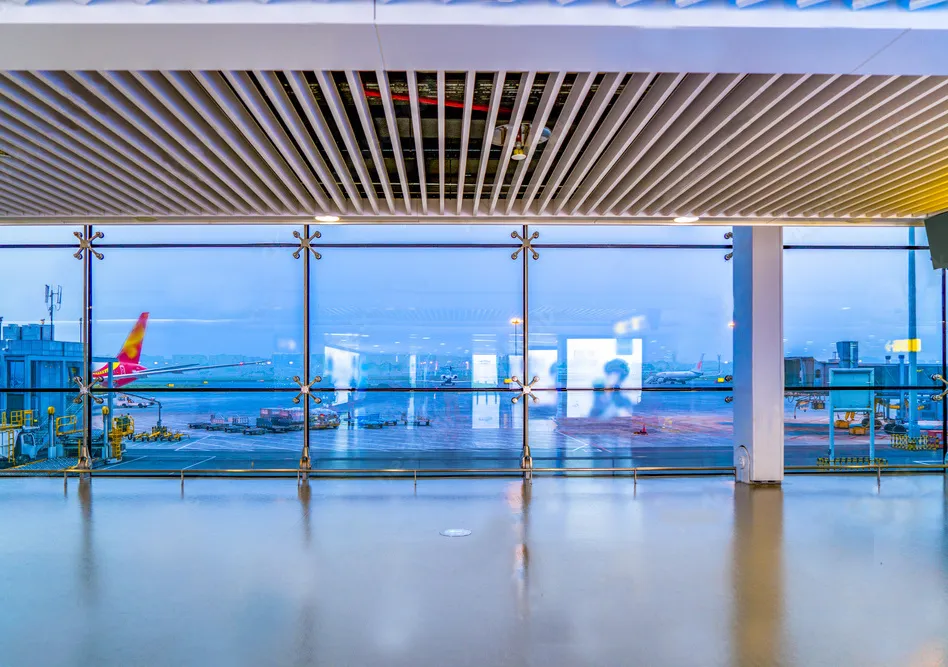

CONCRETE INDUSTRIAL FLOORING
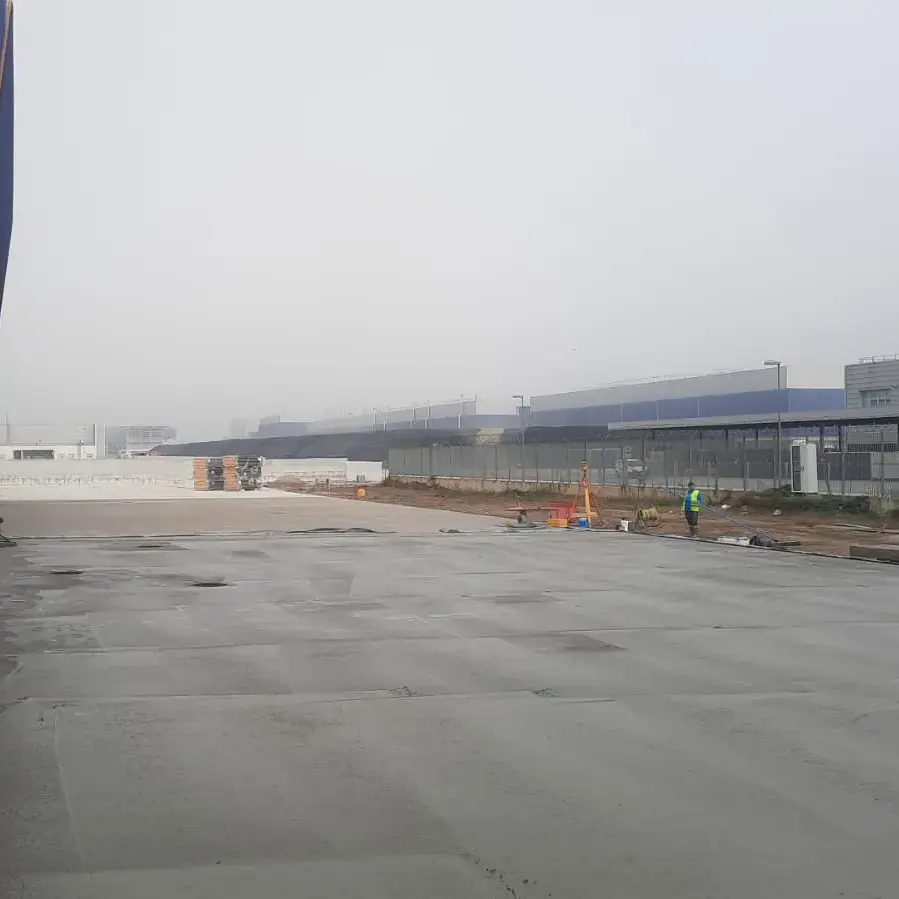
Airport Flooring
In specific areas such as airports and air bases, pavements with special performance characteristics are required. In aircraft parking areas to support the loads of aircraft during maneuvering, parking, and loading/unloading, high-performance concrete pavements must have extremely high-quality characteristics with exceptional compressive strength and durability.
Read more >>
TACTILE PATHS FOR VISUALLY IMPAIRED
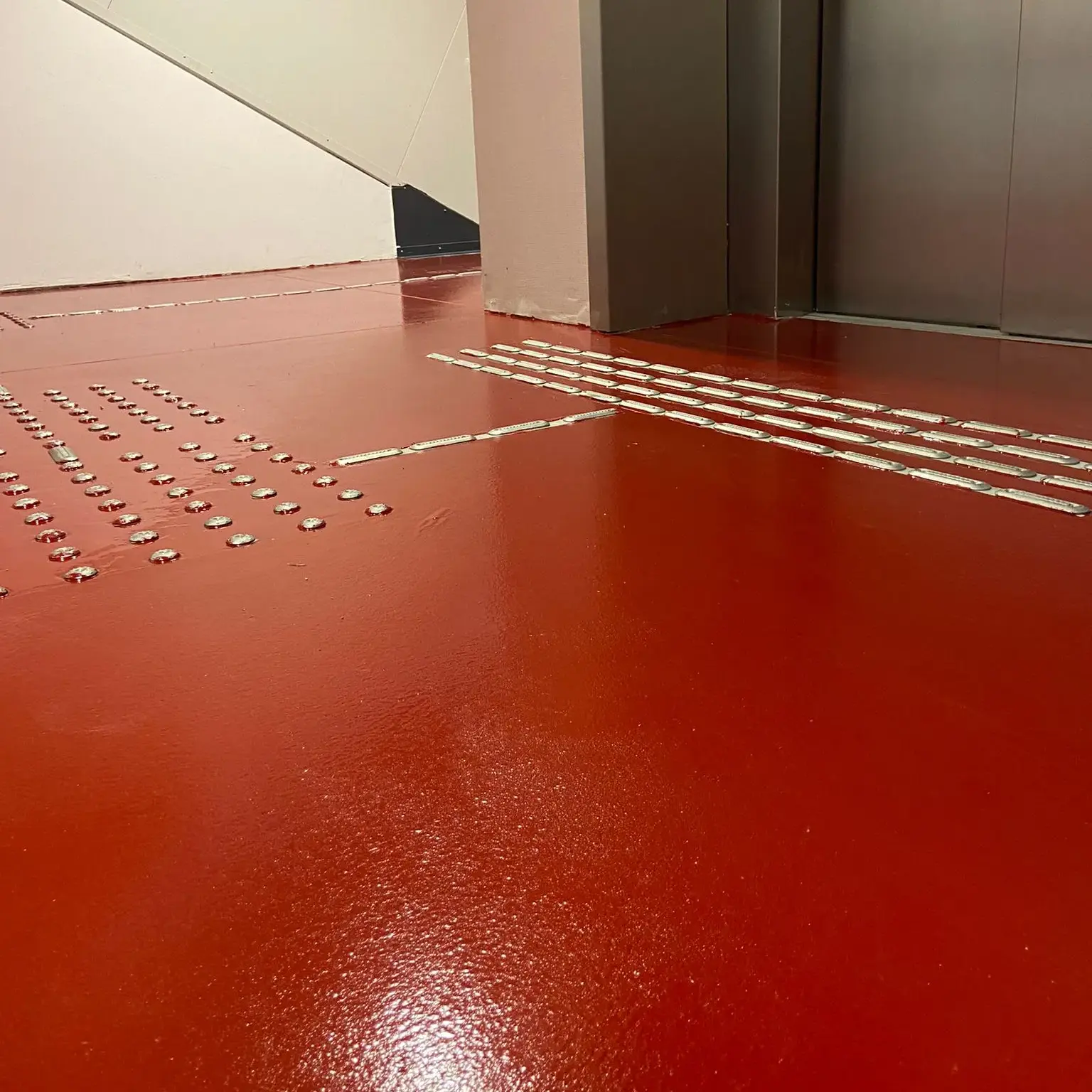
We install resin flooring with integrated tactile paths for the visually impaired, ensuring accessibility and regulatory compliance without compromising the technical performance of the surface.
Where
- Airports
- Helicopter rescue platforms
- Military and defense sector
- Aerospace industry
- Aerospace components
- Satellites and space
Environments
- Specialized technical areas
- Quality and testing laboratories
- Maintenance hangars
- Repair workshops
- Technology centers
- Passenger public areas
- Commercial areas
- Parking
