Leader in resin flooring

Leader in resin flooring
Sustainable stormwater management
Draining floors
that let water soak into the ground
 Frost-proof and anti-slip
Our solutions
When it rains, the ground needs time to absorb the water. This natural cycle has always helped to regulate the balance of our ecosystem. However, impermeable surfaces such as asphalt, concrete, and traditional tiles interrupt this process, turning every downpour into a problem of puddles, flooding, and sewer overloads.
A draining floor overturns this logic. Rather than blocking water, it welcomes it. Thanks to its porous structure, which is made using natural aggregates such as gravel and grit, as well as the latest generation of binders, rainwater can infiltrate the subsoil, exactly the same way as it would on a lawn or a country path.
The result? No standing water, less pressure on urban drainage systems and better infiltration into the subsoil, where ground conditions allow. All this is achieved without compromising the strength, durability, or aesthetic appeal of a modern floor.

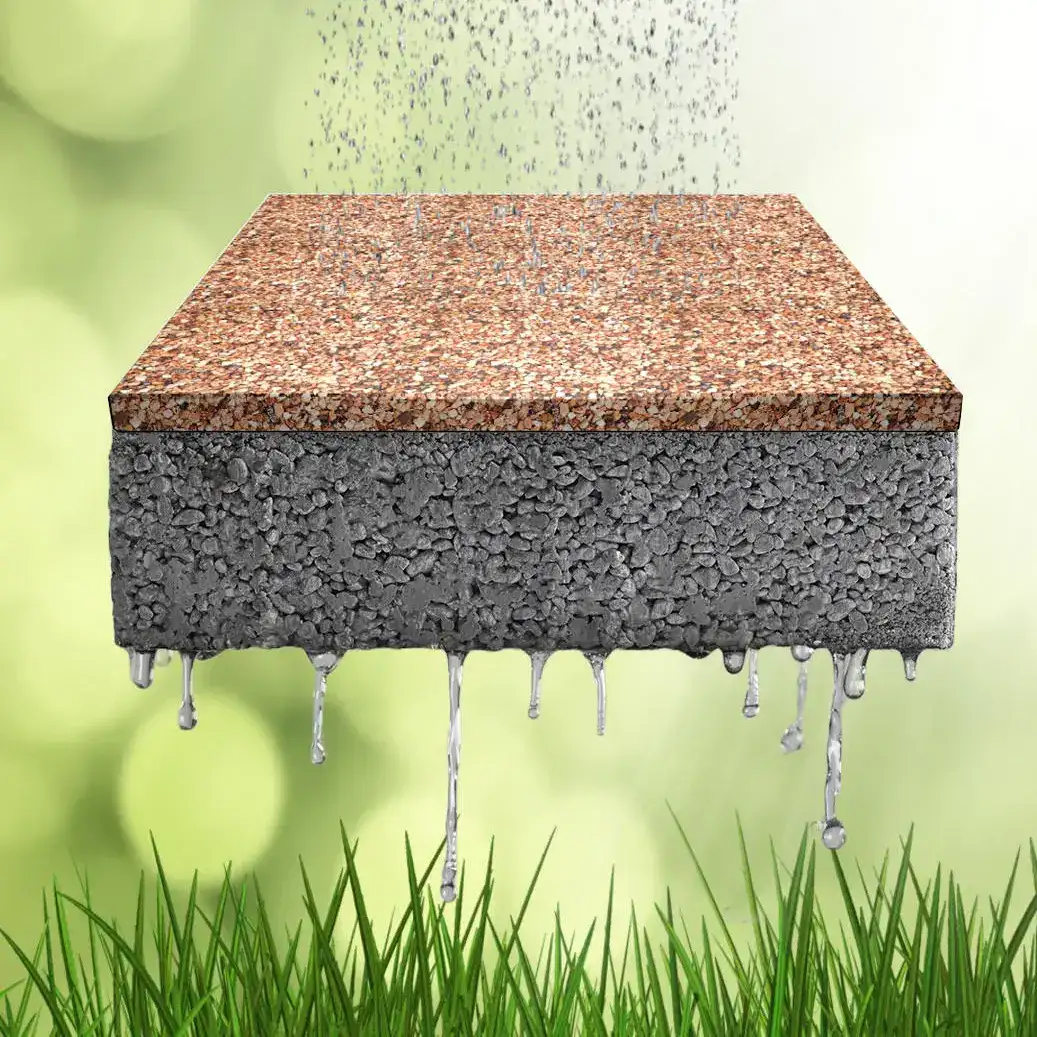
The Prima Idro and Prima Drain Stone solutions were created with this philosophy in mind:to provide surfaces that are robust and attractive, yet designed to promote infiltration into the subsoil, where ground conditions allow.
Choosing permeable paving means investing in safety, stormwater management and easy maintenance. It means choosing a smart, forward-looking solution for runoff control, hydraulic invariance and urban heat island mitigation.
FAQ
Is a permeable paving system also suitable for areas subject to heavy vehicle traffic?
Yes, but with a clear limit: permeable systems are generally rated for vehicles up to 3.5 tonnes (3,500 kg), which makes them suitable for car parks, logistics yards and manoeuvring areas for light commercial vehicles. For heavier loads, such as continuous heavy truck traffic or industrial vehicles above this threshold, a permeable solution is not the most appropriate choice, and an alternative system should be assessed with our technician during the site survey.
How does a permeable paving system perform during heavy rainfall or sudden flooding?
A correctly designed permeable paving system absorbs and drains rainwater directly through its surface, reducing surface ponding even during intense rainfall, within the system’s drainage capacity. In exceptional rainfall that exceeds this capacity, performance also depends on the downstream collection and drainage system, not on the paving alone.
Does it need regular maintenance to keep its drainage capacity effective over time?
Yes. Drainage capacity gradually decreases if the surface pores become clogged with dust, mud or debris. Periodic cleaning (vacuum sweeping or high-pressure washing) is therefore recommended to maintain drainage performance over time, with a frequency that depends on the surrounding environment and traffic levels.