

Leader nelle pavimentazioni in resina

Leader nelle pavimentazioni in resina
1 Ottobre 2025
Polyurethane cement vs epoxy resin: the differences | Prima
To read this article in English, enable automatic translation in your browser.
Among the most sought-after technologies are polyurethane cement and epoxy resin, two high-performance coatings that, while sharing...
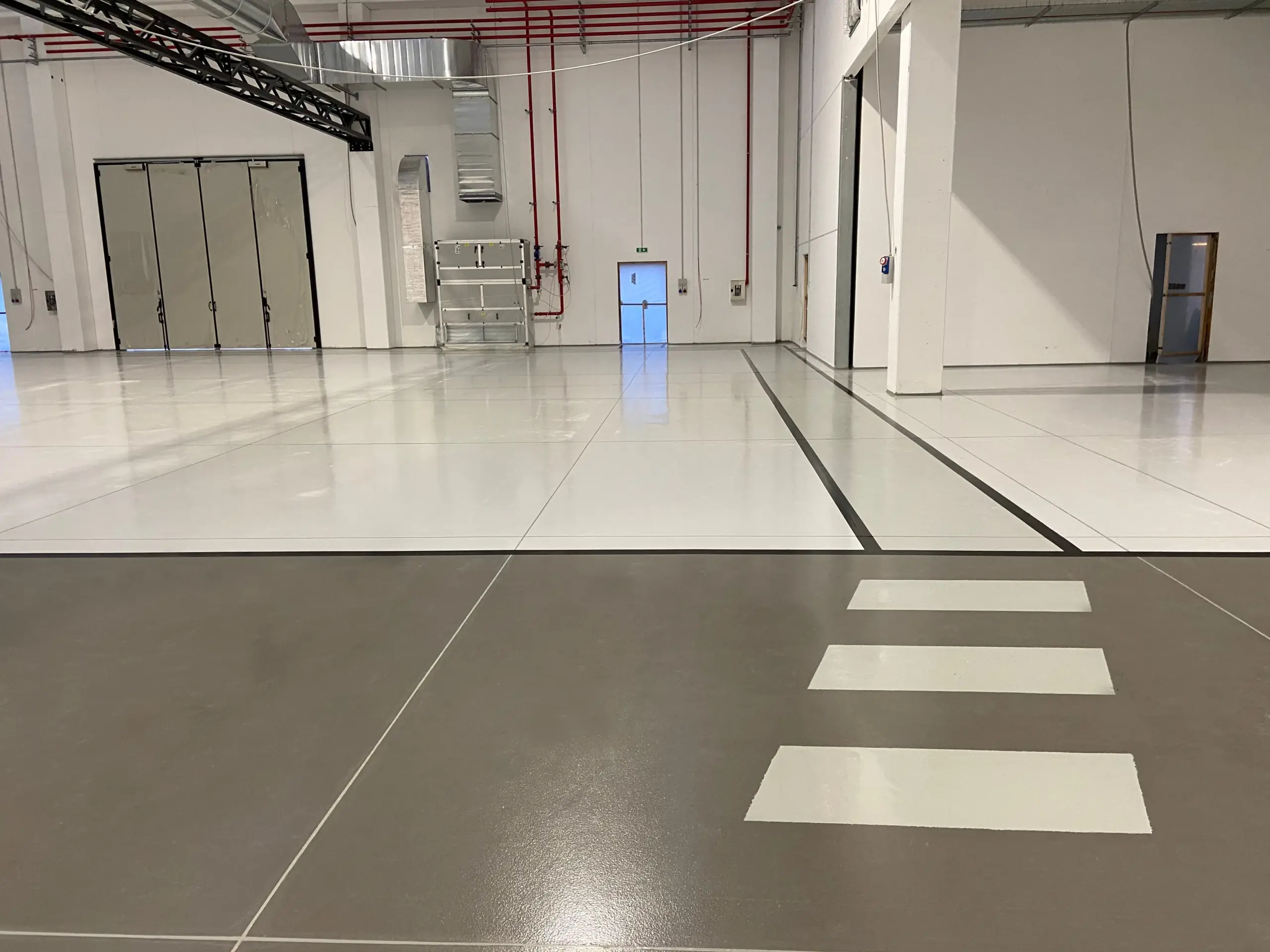
Polyurethane cement vs epoxy resin: which to choose for industrial flooring
Resin floors are currently the most effective solution for industrial environments, logistics warehouses, and retail spaces. Among the most popular technologies are polyurethane cement and epoxy resin, two high-performance coatings that, while sharing the same high quality, differ in their technical characteristics and specific areas of application.
Chemical composition and structure: the fundamental differences
The main difference between these two systems lies in their polymeric nature:
Formative structure: epoxy resin is always a two-component product, while polyurethane cement can be formulated as either two-component or single-component
Different chemical composition: the molecular bases determine different performances.
EPOXY RESIN FLOORING
Superior mechanical strength and adhesion
Once applied and completely hardened on the concrete, epoxy resin gives the floor significantly higher mechanical resistance to abrasion, making it ideal for areas with heavy vehicle traffic and intensive handling.
Key advantages of epoxy flooring:
High mechanical resistance to compression, impact, and scratches: guarantees extreme durability even under heavy loads and intense traffic. Excellent adhesion as a coating for concrete surfaces of any type. Resistance to changes in humidity and protection of the underlying substrate. High level of brightness: shiny surfaces that improve room lighting and reduce energy consumption. Continuous surface without joints: easy to sanitize, ideal for pharmaceutical and food industries. Long-lasting and easy-to-clean floors: reduced maintenance and low operating costs over time. Customizable aesthetic finish with different colors, textures, and decorative systems.
Some limits of epoxy floors:
Epoxy coatings have some critical issues that need to be carefully evaluated. Vulnerability to acids, aggressive fats, and oils: in the presence of particularly aggressive chemicals, they can deteriorate more quickly than polyurethane. Sensitivity to thermal changes and freezing temperatures: less suitable for cold rooms or environments with significant temperature fluctuations. Rigid coating subject to the effects of sunlight: tendency to yellow when exposed to direct UV rays.
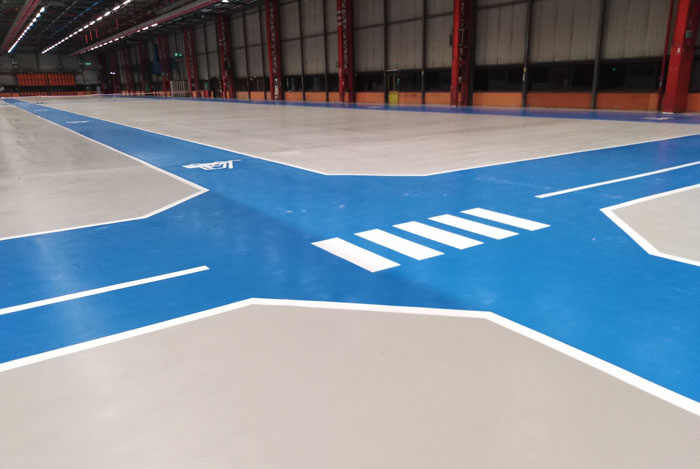
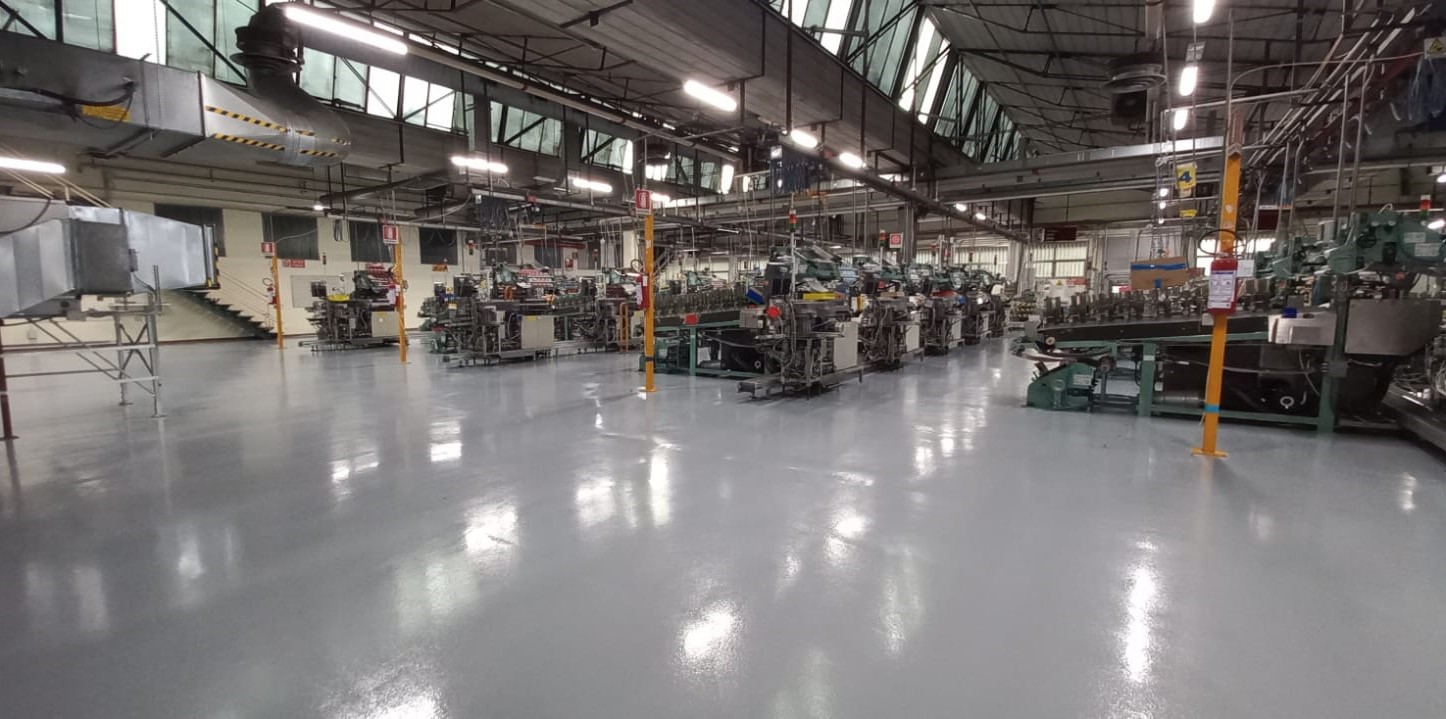

Discover epoxy resin systems >>
POLYURETHANE CONCRETE FLOORING
Flexibility and resistance to thermal shock
Polyurethane cement is the optimal choice when operating conditions are particularly harsh, both in terms of mechanical stress and chemical attack.
Key advantages of polyurethane cement flooring:
Superior thermal resistance: tolerates significant temperature changes, perfect for food industries, cold rooms, and environments with variable temperatures UV stability: maintains its properties even when exposed to direct sunlight. Excellent chemical resistance: withstands acids, bases, and aggressive solvents. Greater elasticity: the floor becomes more flexible, reducing the risk of cracks and micro-cracks. Anti-slip properties: guaranteed safety even in the presence of liquids.

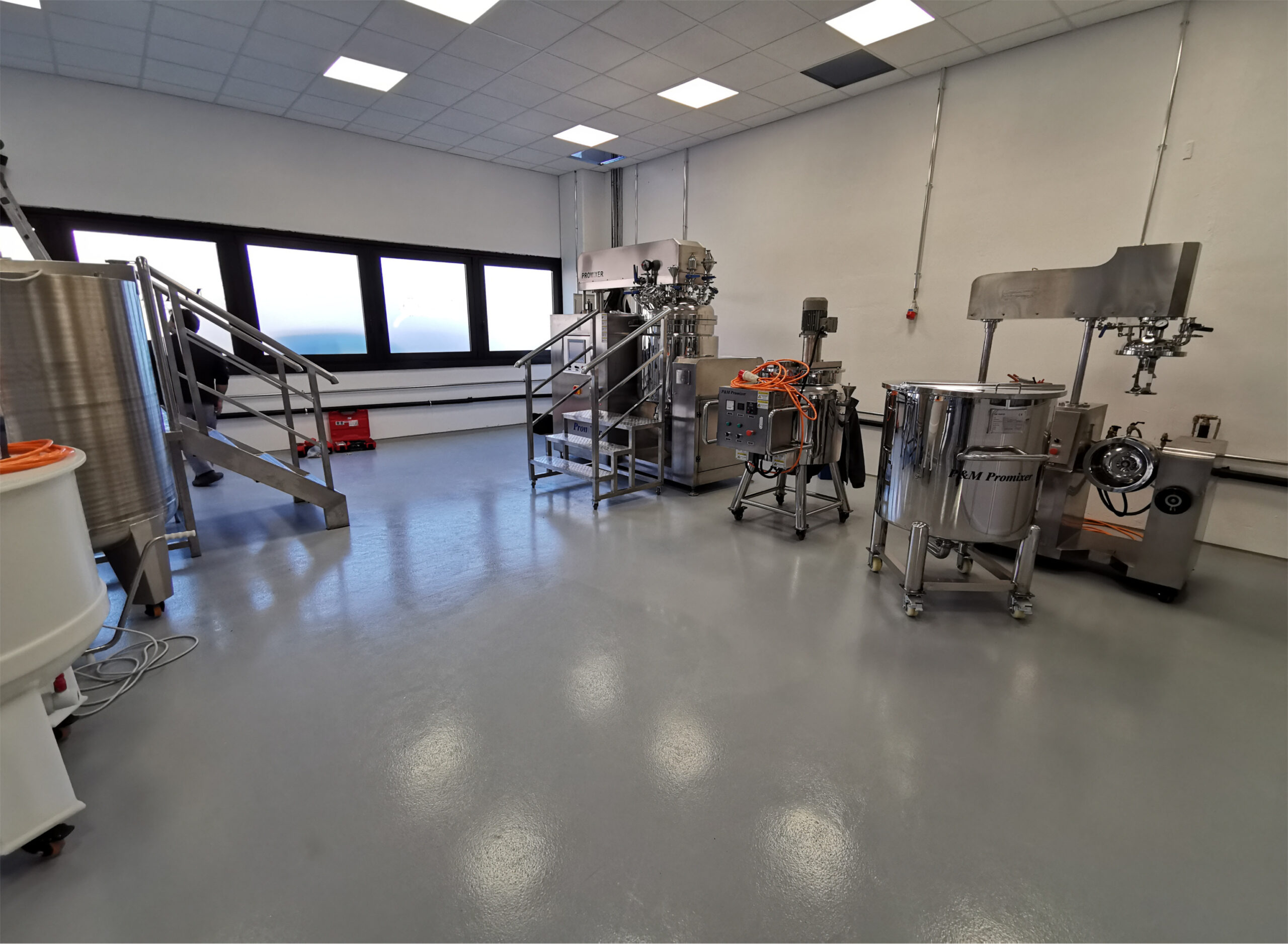
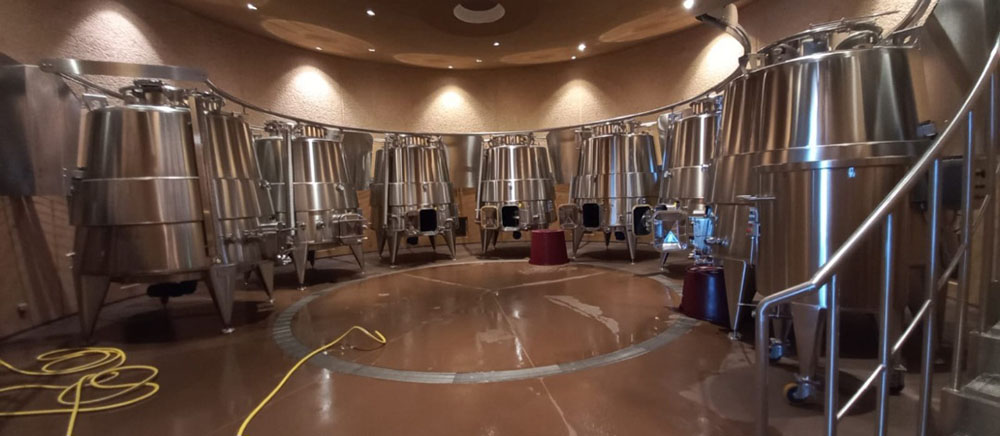
Discover polyurethane cement systems >>
How to choose the right coating: a practical guide
Choose epoxy resin if:
- You require maximum resistance to compression, impact, and scratches.
- The environment is indoors with a stable temperature (15-25°C).
- You are looking for a high-quality aesthetic finish with high brightness.
- The floor will not be exposed to direct UV rays or extreme temperatures.
- Priority: ease of cleaning and reduced maintenance.
Opt for polyurethane cement if:
- Priority: extreme thermal and chemical resistance
- The environment is subject to significant temperature fluctuations (cold rooms, ovens, outdoor areas)
- Aggressive chemicals are present (acids, oils, fats)
- The floor is exposed to UV rays (outdoor areas or skylights)
- Greater flexibility is needed to absorb structural movements
Prima Pavimenti has the expertise and experience to evaluate the most suitable solutions for specific business contexts, optimizing solutions and implementation times.
GET IN TOUCH